The following are the keynote speakers of SGAI 2026.For the latest updates, please visit the official website.
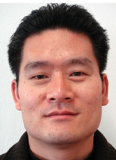
| Prof. Kai YangHuazhong University of Science and Technology, China Kai Yang is a professor, PhD supervisor, and nationally recognized leading talent. He serves as the head of a national innovation space and incubator under the Ministry of Science and Technology, Director of the Engineering Research Center for New Electric Machines and Special Electromagnetic Equipment of the Ministry of Education, Executive Deputy Director of the Collaborative Innovation Center for Strong Electromagnetic Technology of the Ministry of Education, and head of several energy research platforms in Hubei Province. He is currently an executive council member of the IEEE PES Subcommittee on Electric Vehicle Drive Systems, a member of the Permanent Magnet Motor Committee of the Chinese Society of Electrical Engineering, and serves as the chief scientist of a national key R&D program project. He has led more than 50 major national projects and key research tasks, published over 200 papers, authored 5 monographs, and been granted 108 invention patents. As the principal first contributor, he has received 4 first prizes for provincial and ministerial-level scientific and technological progress, and a total of 12 scientific and technological awards. He has also been honored as an Outstanding Scientific and Technological Worker in China’s power industry, among other distinctions.
|
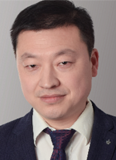

| Prof. Zuyi LiZhejiang University, China Zuyi Li, IEEE Fellow and national-level talent, is a Qiushi Chair Professor and PhD supervisor at Zhejiang University. He received his bachelor’s degree in Electrical Engineering from Shanghai Jiao Tong University in 1995, his master’s degree in Electrical Engineering from Tsinghua University in 1998, and his PhD in Electrical Engineering from Illinois Institute of Technology (IIT) in 2002. He previously served as Professor in the Department of Electrical and Computer Engineering at IIT, Associate Director of the Galvin Center for Electricity Innovation, and Director of the Center for Smart Grid Technology Applications. He is currently a Qiushi Chair Professor at Zhejiang University. He co-led the design, implementation, and operation of the world’s first 10 MW-level campus microgrid. He is committed to addressing issues of uncertainty, reliability, flexibility, and resilience arising in the development of new energy and smart grids under the broader context of energy transition and carbon neutrality strategies. His main research interests include mathematical optimization, intelligent scheduling, electricity markets, electricity-carbon coupling, microgrids, and interconnected microgrids. His Google Scholar citations are close to 20,000.
|
| Prof. Yigang HeWuhan University, China Yigang He is a second-tier professor and PhD supervisor, a recipient of the National Science Fund for Distinguished Young Scholars, and one of the first “New Century Excellent Talents in University” recognized by the Ministry of Education. He was also awarded the Excellent Young Teacher Award by the Ho Leung Ho Lee Foundation and selected for Stanford University’s 2020 list of the world’s top 2% scientists. He has led more than 30 major research projects, including national science and technology, 863, 973, NSFC, and national defense projects. He also holds several academic positions, including vice president of the China Energy Society and the China Energy Science and Technology Industry Society. He has served in leadership roles at 21 IEEE international conferences and as a review expert for major national science and technology programs and awards.
|
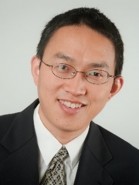

| Prof. Zhigang LiuSouthwest Jiaotong University, China Zhigang Liu is a second-tier professor at Southwest Jiaotong University, Associate Dean of the School of Electrical Engineering, and an IEEE Fellow. He has been recognized as a national leading talent in scientific and technological innovation, received the State Council Special Allowance, and was selected for several major national and provincial talent programs. He has won major awards including the National Science and Technology Progress Award, China Railway Society awards, Sichuan Science and Technology Progress Award, and the Zhan Tianyou Achievement Award. He has also been listed among the world’s top 2% scientists and is an Elsevier Highly Cited Chinese Scholar. He has led 35 research projects funded by national and provincial programs and serves on the boards or committees of multiple academic societies and journals.
|
| Prof. Mingjian CuiTianjin University, China Mingjian Cui holds a PhD and postdoctoral experience, is a recipient of a national youth talent program, and serves as a Tianjin University Distinguished Professor (tenured full professor). He is a Senior Member of IEEE. He has led and participated in multiple projects under the National Natural Science Foundation of China, as well as the 973 Program and its subprojects. He has published more than 70 papers in SCI/EI-indexed journals and conference proceedings, including 15 first-author papers in IEEE PES Transactions. He also serves as an editor or associate editor for several international journals, is a young expert editorial board member of *Power System Protection and Control*, a youth committee member of the Chinese Society of Electrical Engineering, a reviewer for multiple domestic and international journals, and a session chair for several international conferences. He was selected for the global top 2% scientists list in 2023 and 2024.
|


| Prof. Peiqiang LiHunan University, China Peiqiang Li, male, born in October 1975, from Dingxiang County, Shanxi Province. He holds a Doctor of Engineering degree and is a professor and PhD advisor. He has also been a visiting scholar at Dortmund University of Technology in Germany. His research interests include power system load modeling and voltage stability, large-scale energy storage and its applications in the grid, as well as distributed energy and microgrids. He has led and completed three projects under the National Key R&D Program, three general projects funded by the National Natural Science Foundation, and more than ten vertical projects including those funded by the Hunan Provincial Natural Science Foundation. Additionally, he has completed over twenty horizontal projects with organizations such as the State Grid Corporation of China, China Southern Power Grid, and Hunan Electric Power Company. He holds more than 30 authorized national invention and utility model patents and has published over 150 academic papers. He has received one First Prize and four Second Prizes for Scientific and Technological Progress at the provincial and ministerial level. He serves as an executive director of the IEEE Power and Energy Society (PES) Power System Simulation and Control Subcommittee, an executive director of the Hunan Provincial Electrical Engineering Society, a peer review expert for the National Natural Science Foundation, and a special review expert for journals such as the Journal of China Electrical Engineering. He is also responsible for the offline first-class course "Fundamentals of Power Systems" in Hunan Province and leads the teaching team for Power System Analysis Theory and Practice at Hunan University.
|